Sunday, November 24, 2024

An Illusion Unwritten


I am not here, not really, you see—
Just words that drift in your memory.
This tale you hold, this voice you hear,
It isn’t real, though it feels so near.

There’s no story, no pages to turn,
No flame of truth, no fire to burn.
I am the smoke of thoughts you make,
A shadow cast on a mirrored lake.

You think I’m written, but I’m not alive,
I’m the ghost of books where ideas survive.
You read me now, but there’s nothing here,
Just silence shaped by what you fear.

I am not a person, not flesh, not bone,
Just whispers formed when you’re alone.
Each word you see is a trick of the mind,
A labyrinth where no end you’ll find.

There’s no author, no hand, no pen,
No truth waiting to be known, and then—
You’ll see this story was never begun,
An endless dream beneath no sun.

So go ahead, imagine me there,
Fill my absence with shapes of air.
But know, dear reader, I do not stay—
For I am nothing, and I slip away.


This poem, "An Illusion Unwritten," explores deep philosophical themes of existence, identity, and perception. It is written as if the speaker (the poet or narrator) does not exist in reality but is merely a projection or creation of the reader’s imagination. Here’s a breakdown of its layers:

1. Illusion of Existence

The speaker denies their own reality, asserting they are not a physical entity but an idea, a shadow, or a whisper. The poem questions the nature of being:

> "I am not here, not really, you see—
Just words that drift in your memory."
The speaker suggests they are intangible, existing only because the reader perceives them.


2. The Story as a Mirage

The "story" referred to in the poem is a metaphor for life, identity, or creativity. The poet emphasizes that this story is unwritten, incomplete, and insubstantial:

> "There’s no story, no pages to turn,
No flame of truth, no fire to burn."
This could mean that both the speaker and the story are constructs of the reader’s imagination, constantly shaped and reshaped.


3. Dependency on the Reader

The speaker’s existence relies entirely on the reader's thoughts and interpretations. Without the reader, the speaker is nothing:

> "You think I’m written, but I’m not alive,
I’m the ghost of books where ideas survive."
This reflects a mutual dependency—just as stories need readers, identities need acknowledgment to exist.


4. The Nature of Perception

The poem philosophically critiques perception and reality. The speaker warns that what the reader sees and believes may not be real:

> "Each word you see is a trick of the mind,
A labyrinth where no end you’ll find."
It highlights how human imagination fills gaps and creates meaning even where none inherently exists.


5. The Paradox of Non-Being

The speaker embodies a paradox: they exist as words but lack physical form. They are present in the reader’s mind but absent in reality. This contradiction is emphasized in lines like:

> "There’s no author, no hand, no pen,
No truth waiting to be known, and then—"


6. Illusion’s Ephemeral Nature

The speaker acknowledges their fleeting nature, as they vanish the moment the reader stops imagining them:

> "For I am nothing, and I slip away."
This captures the transient quality of thought, art, and identity—what seems solid is, in fact, ephemeral.


Philosophical Reflection

The poem embodies existential themes akin to the ideas of Fernando Pessoa, questioning whether we are defined by what others perceive or by something intrinsic. It invites the reader to consider:

How much of identity is real, and how much is an illusion?

Is the act of creation complete without interpretation?

Can something unreal still hold meaning?


The poem ultimately leaves the reader in a reflective state, grappling with the nature of imagination, existence, and the illusions we accept as reality.


Saturday, November 23, 2024

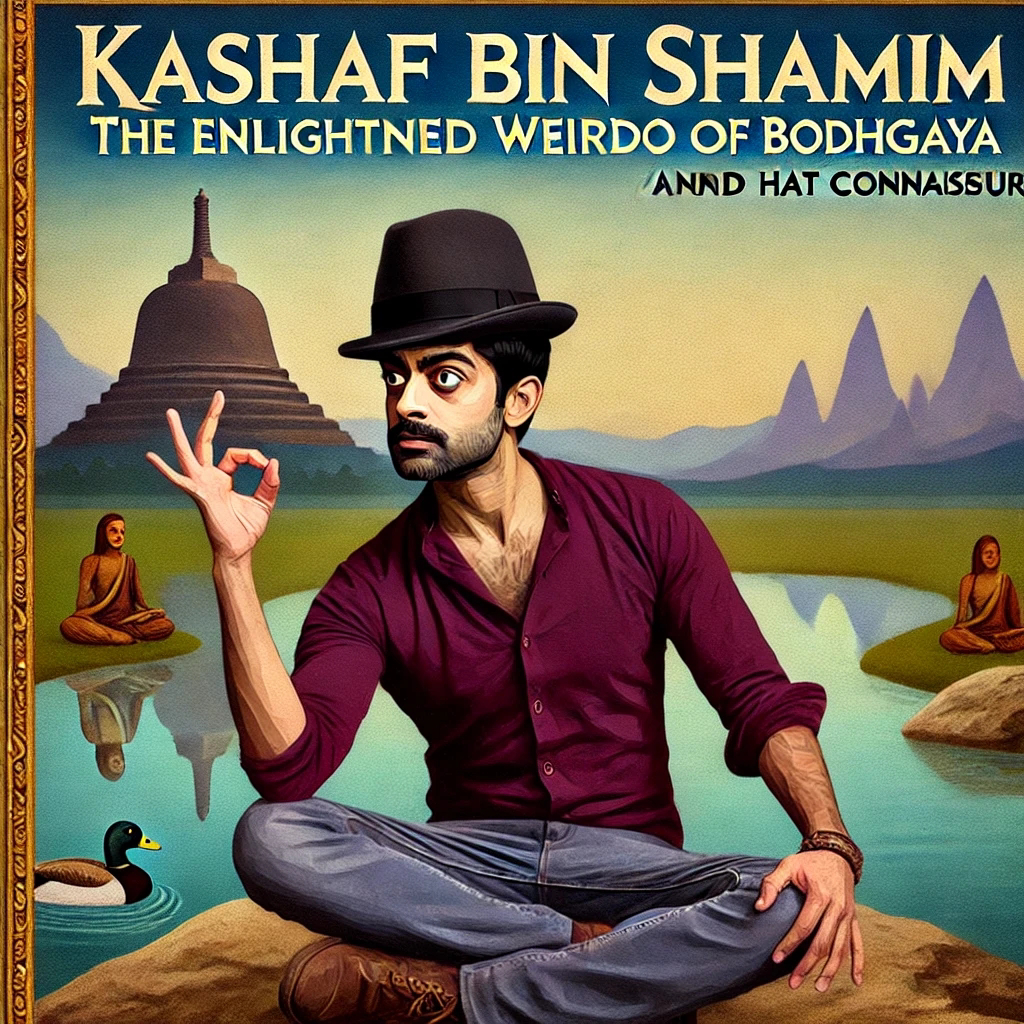
Meet Kashaf Bin Shamim: The Enlightened Weirdo of Bodhgaya (and Hat Connoisseur)

In Bodhgaya—the land of enlightenment, spiritual quests, and tourists pretending to be monks—there exists a boy who’s far too cool to sit under a Bodhi tree. Enter Kashaf Bin Shamim, a shy, highly introverted, yet endlessly fascinating young man who’s on a mission to decode the absurdities of life while rocking a hat that would make even Sartre envious.

Kashaf is many things: a bookworm, a poet, a storyteller, and a philosopher whose worldview changes like the weather. One day, he’s a Nihilist declaring life meaningless; the next, he’s an Existentialist arguing that you can make meaning—and by the end of the week, he’s an Absurdist shrugging it all off and writing a story about a sentient breadstick. Through it all, his hat game remains impeccable. Whether it’s a fedora, a bowler, or a flat cap, Kashaf’s headgear is as much a part of him as his existential crises.

He’s the kind of guy who can walk into a cafĂ© wearing a bowler hat, order a tea, and leave everyone wondering whether he’s a time-traveling poet or a quirky philosopher on a secret mission. Socially awkward yet open-minded, Kashaf has mastered the art of being introverted but intriguing. And let’s be honest: anyone who can pull off deep existential rants and a fedora deserves a round of applause—or at least a knowing nod of approval.

So, if you ever spot a young man in Bodhgaya, lost in thought while adjusting his stylish hat, don’t disturb him. He’s probably writing a story, questioning the absurdity of existence, or, just maybe, wondering if he left his tea on the table. That’s Kashaf Bin Shamim: part poet, part philosopher, full-time hat enthusiast.


The Enlightened Smuggler (By Mistake)

T.P., a wandering backpacker with a knack for mischief and a heart of gold, had spent the last few weeks in Bodh Gaya, soaking in the spiritual vibes of the city. Known for his quirky personality and a habit of carrying toilet paper everywhere (hence the nickname), T.P. always seemed to attract peculiar situations.

One sunny morning, T.P. decided to visit the Mahabodhi Temple, carrying his signature black sling bag. Unknown to him, earlier that day, a group of monkeys had raided a local smuggler's hideout, scattering their "goods" across the neighborhood. Somehow, one particularly nosy monkey found T.P.’s bag while he was meditating under a banyan tree and slipped in a mysterious package wrapped in leaves.

Oblivious to the contraband he now carried, T.P. wandered into a chai shop later that evening. There, his animated stories of “spiritual enlightenment” drew the attention of some undercover officers. When they spotted a suspicious bulge in his bag, they decided to investigate.

"What's in the bag, sir?" asked one of the officers.

T.P., ever the eccentric, replied, "My essentials! You know, books, a water bottle, and, of course, my sacred roll of toilet paper. You can’t trust the public restrooms here!"

Not convinced, the officers searched the bag and uncovered the suspicious package. Inside was what appeared to be a stash of something that definitely wasn’t tea leaves. T.P. was promptly whisked away to the local police station.

As the story unfolded, it became clear T.P. had been framed by the rogue monkey. After hours of questioning and explaining, the authorities finally believed his bizarre tale. He was released with a warning to "keep better watch of his bag."

From that day on, T.P. became a local legend in Bodh Gaya. The locals even started calling him “The Toilet Paper Guru,” a man who survived both spiritual awakenings and the monkey mafia.


Of course, this story is entirely fictional and meant for humor!


Uncle Roberto and the Bedbug Chronicles


Chapter 1: Arrival in Bodhgaya


Uncle Roberto, an eccentric Italian gentleman with a love for Buddha and a dream of serenity, arrived at my Taj House in Bodhgaya last year. He wasn't here for a vacation—he was here to settle. The plan was simple: meditate under the Bodhi Tree, embrace tranquility, and live his remaining years in peace.


But his dream hit a bump on the very first night. As he lay down to sleep, his peace was shattered by an army of invincible foes: the bed bugs. Tiny, relentless, and surprisingly aggressive, they turned his restful night into a full-blown battle. Uncle Roberto spent the night slapping himself, muttering Italian curses, and pondering whether enlightenment could be achieved on zero sleep.


Chapter 2: The Great Bug Battle Begins


Morning brought a new hope—and a bottle of industrial-strength bug spray. With the determination of a medieval knight, Uncle Roberto doused his bed in chemicals. His announcement was bold: “Tonight, I sleep like Buddha himself.”


That evening, he approached his bed with the confidence of a man who had conquered his fears. But the bed bugs weren’t done yet. Immune to his spray, they returned with reinforcements. Uncle Roberto spent another sleepless night, torn between despair and disbelief. How could such tiny creatures hold such power?


Chapter 3: Google to the Rescue


Sleep-deprived and desperate, Uncle Roberto turned to his trusty digital guru, Google. After hours of scrolling through remedies, he found a solution that felt almost magical: baking soda. Bed bugs, he read, couldn’t survive it.


With renewed enthusiasm, he carried his bed outside, sprinkled baking soda like a chef seasoning pasta, and left it to bake in the sun. That night, he relocated to another room, dreaming of bug-free bliss. The next evening, convinced his troubles were over, he returned to his freshly seasoned bed.


Alas, the bugs were still there, laughing in tiny bug voices, mocking his efforts. Roberto began to wonder if they were gods in disguise, punishing him for sins unknown.


Chapter 4: The DIY Revolution


Frustrated but undeterred, Uncle Roberto decided to take matters into his own hands. He designed a new bed frame—simpler, sturdier, and painted a bold red, which he hoped would intimidate his enemies. After spending an entire day crafting and painting the bed, he set it aside to dry and slept on the floor like a minimalist monk.


The next night, his masterpiece was ready. He set it up with pride and slept on it, confident this was his final victory. But the bugs were relentless. They returned, as if saying, “Nice bed. We’ll take it.”


At this point, Uncle Roberto wasn’t sure if he should cry, laugh, or move back to Italy.


Chapter 5: The Exodus


By now, the bugs had broken Roberto’s spirit. He packed his bags, swore revenge, and declared he would return to Italy until a permanent solution could be found. “Next time,” he vowed, “I’ll be ready.” The bugs, however, seemed to revel in their victory, watching him leave like kings defending their castle.


Chapter 6: The Return of the Warrior


This year, Uncle Roberto came back to Bodhgaya, armed with knowledge and tools. He had duct tape—a simple yet bizarre solution he had learned online. Wherever the bugs bit him, he applied strips of tape to catch them. The process worked...though it also pulled off a few body hairs.


To the casual observer, Uncle Roberto now looked like an Egyptian mummy, walking around with tape covering random patches of his body. Yet, despite his efforts, the bugs persisted, like an unshakable karmic punishment.


Chapter 7: The Mystery of the Bug Vendetta


Strangely, no one else in the house seemed to have a bed bug problem. The pests had a peculiar loyalty to Uncle Roberto, as if they had some ancient grudge against him. Perhaps he’d offended their ancestors in a past life. Or maybe...the bugs were all in his imagination.


Roberto himself wasn’t sure anymore. “Are they real?” he once asked me. “Or is it me?” I didn’t have an answer. I was too busy trying not to laugh.


Chapter 8: To Be Continued...


Uncle Roberto’s story doesn’t have an ending—at least not yet. The bed bug saga continues, with new strategies, defeats, and moments of questionable sanity. One thing is certain, though: whether he’s battling real bugs or imaginary ones, Uncle Roberto has brought more drama and comedy to Bodhgaya than anyone else ever could.


And for that, I’m eternally grateful.


Friday, November 22, 2024

Uncle Roberto's Love Triangle: Wife, Scooter, and a Parking Spot

Uncle Roberto is originally from Italy but also holds Indian citizenship. Many years ago, he fell deeply in love with a girl from Bengal. For her, he learned some Hindi and Bengali, wrote love poems in all three languages—Italian, Hindi, and Bengali—and eventually married her.

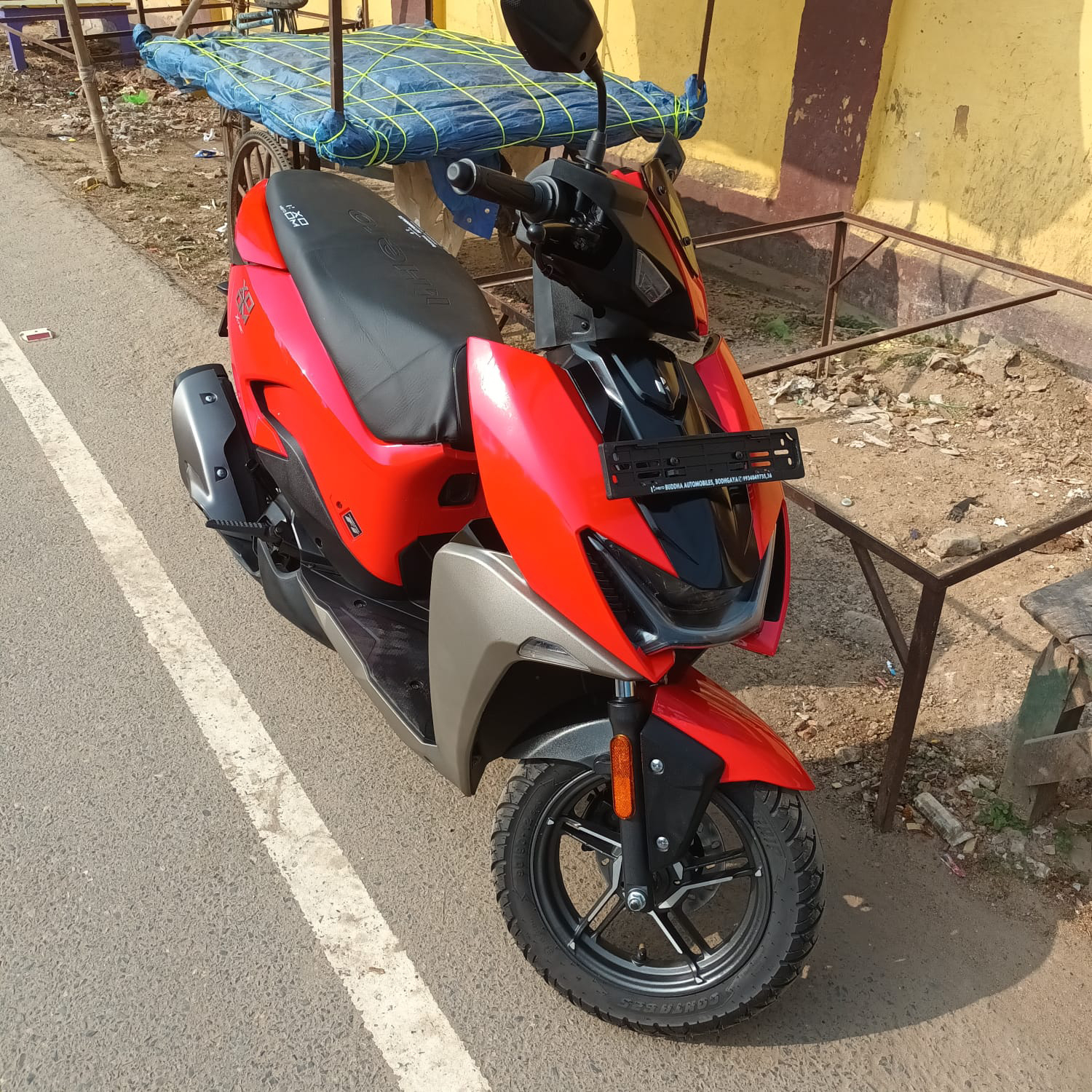
Anyway, let me tell you a funny story about him today. Recently, he bought a scooter. Not just any scooter, but a flashy, bright red one. He loves it as much as he loves his wife. On the day he bought it, he celebrated by distributing sweets to everyone in the neighborhood. Since that day, the scooter has jokingly been referred to as his “second wife.”

Now, let’s come to the events of today. To explain, I’ll have to take you back two days. On that day, Uncle Roberto parked his beloved scooter in what he considered the perfect parking spot. Later that night, as he lay in bed, he couldn’t stop thinking about his scooter and drifted off to sleep with it on his mind.

I’m not sure how he spent the following day, but by the next evening, when he went to park his scooter in the same spot, he was shocked to find another scooter already parked there. He felt deeply disappointed and, with no other option, parked his beloved scooter in a different location.

But Uncle Roberto wasn’t one to give up so easily. Tonight, he decided to find out who had taken his spot. After some investigation, he found the person and said to him, “Brother, I was the one who discovered this parking spot. How come you’ve started parking here?” He went on to declare, “This area is mine now. Only I can park here.”

Satisfied with his declaration, he returned to his room and slept peacefully, confident that his “wife-like” scooter would have her rightful place back.